Many students today sit in front of their books for hours but still feel like they learned nothing. They try to study seriously, but after a few minutes, their attention shifts to social media, YouTube, messages, or random thoughts.
Some students even feel guilty because they know exams are important, yet they still cannot concentrate properly.
If you feel like you can’t focus while studying anymore, you are not alone.
The biggest problem is not intelligence. Most students are struggling because modern distractions are damaging concentration levels faster than ever before.
Short-form videos, constant notifications, multitasking, stress, and poor study habits are making it difficult for students to stay focused for long periods.
The good news is that concentration can improve again with the right methods and habits.
This guide explains the real reasons students lose focus while studying and practical ways to fix the problem without burning out mentally.
Many students who can’t focus while studying anymore often think they are lazy, but the real problem is usually distraction overload and poor study habits.
Why Students Can’t Focus While Studying Anymore 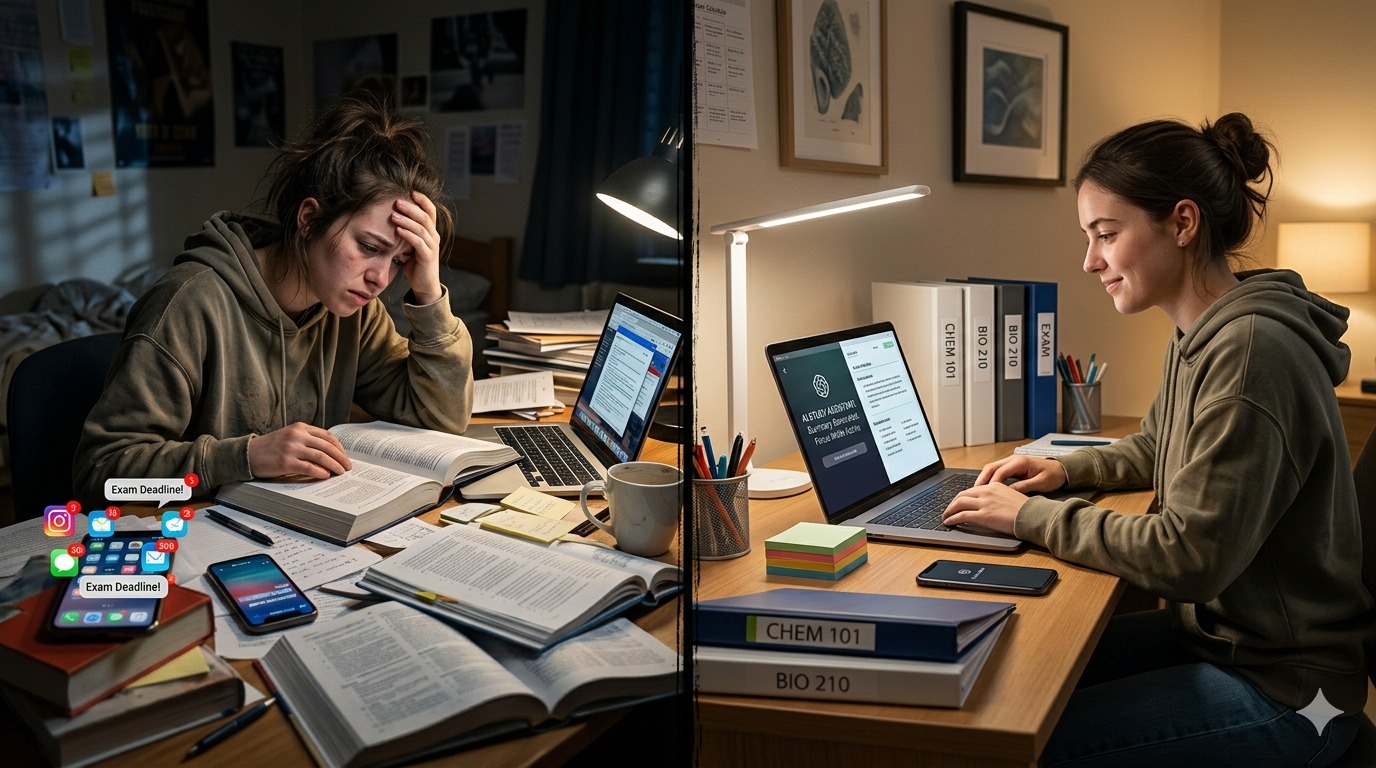
Students today live in an environment filled with distractions.
Unlike previous generations, students now constantly switch between:
- YouTube Shorts
- Gaming
- Notifications
- Multiple tabs and apps
This trains the brain to expect constant stimulation.
As a result, normal studying starts feeling “slow” or “boring,” even when the subject is important.
This is one of the biggest reasons many students can’t focus while studying anymore.
1. Phone Addiction Is Reducing Attention Span
One major reason students lose concentration is continuous phone usage.
Many apps are designed to keep users scrolling endlessly. Short videos especially reduce patience and attention span over time.
Students often:
- Check notifications every few minutes
- Open social media during study breaks
- Switch between apps constantly
Even small distractions interrupt deep concentration.
Research shows that after a distraction, the brain may take several minutes to fully regain focus.
Signs Your Focus Is Becoming Weak
Students usually notice concentration problems through small habits like:
- Reading the same sentence repeatedly
- Forgetting topics quickly
- Daydreaming while studying
- Checking phone frequently
- Feeling mentally tired after short study sessions
- Starting many tasks but finishing none
These are common signs of reduced focus and mental overload.
2. Multitasking Is Hurting Productivity
Many students believe multitasking saves time.
In reality, studying while:
- Watching videos
- Listening to distracting content
- Messaging friends
- Browsing social media
actually reduces learning efficiency.
The brain performs better when it focuses on one task at a time.
Students who multitask often spend more time studying but remember less information.
3. Poor Sleep Is Damaging Concentration
Lack of sleep seriously affects memory and focus.
Students who sleep late regularly may experience:
- Brain fog
- Slow thinking
- Low energy
- Reduced concentration
- Poor memory retention
Many students try to sacrifice sleep before exams, but this usually lowers performance rather than improving it.
A healthy brain needs proper rest to concentrate effectively.
How to Fix Can’t Focus While Studying Problems 
Improving concentration does not require studying for 12 hours daily.
Small practical changes can improve focus significantly.
4. Use the 45-Minute Deep Focus Method
One of the best ways to improve concentration is studying in focused sessions.
Try this method:
- Study for 45 minutes
- Take a short 10-minute break
- Repeat
During the 45-minute session:
- Keep phone away
- Close unnecessary tabs
- Focus only on one subject
This trains the brain to stay concentrated for longer periods gradually.
5. Create a Clean Study Environment
Your environment affects concentration more than most students realize.
A messy or noisy space increases distractions.
Simple improvements:
- Clean study desk
- Proper lighting
- Comfortable chair
- Minimal distractions
- Quiet surroundings
A calm environment helps the brain stay focused naturally.
6. Stop Depending Only on Motivation
Many students wait until they “feel motivated” to study.
The problem is motivation changes daily.
Successful students usually rely more on routines than emotions.
Instead of saying:
“I’ll study when I feel motivated.”
Try:
“I’ll study for 30 minutes no matter what.”
Small consistent study sessions improve focus better than occasional long sessions.
7. Use AI Tools to Reduce Mental Overload
Students sometimes waste too much energy on repetitive tasks instead of actual learning.
AI tools can help simplify:
- Note organization
- Summaries
- Study planning
- Grammar correction
- Quick explanations
For example:
- ChatGPT helps explain difficult concepts
- Notion AI helps organize notes
- Grammarly improves writing quality
The goal is not replacing learning with AI.
The goal is reducing unnecessary workload so students can focus better on understanding subjects.
8. Improve Your Dopamine Habits
Constant entertainment overload makes studying feel less interesting.
Students who spend hours consuming:
- Short videos
- Endless scrolling
- Fast entertainment
often struggle to enjoy slower activities like studying.
To improve focus:
- Reduce screen time gradually
- Avoid using phone immediately after waking up
- Spend some time offline daily
- Limit short-form content
These habits help the brain regain patience and concentration.
9. Study Actively Instead of Passively
Many students read textbooks repeatedly without interacting with the information.
This leads to poor memory retention.
Better methods include:
- Solving practice questions
- Teaching concepts aloud
- Creating short summaries
- Using flashcards
- Testing yourself regularly
Active learning keeps the brain engaged and improves concentration naturally.
Common Mistakes Students Should Avoid
Students struggling with focus often make these mistakes:
- Studying continuously without breaks
- Keeping phone nearby
- Trying to study multiple subjects together
- Comparing study hours with others
- Sleeping very late
- Depending completely on AI-generated answers
Avoiding these habits can improve productivity significantly.
Can Students Improve Focus Again?
Yes.
Focus is not permanently destroyed.
The brain adapts based on daily habits. Students who gradually reduce distractions and build better study routines usually notice improvements within a few weeks.
The key is consistency.
Even small improvements repeated daily create better concentration over time.
https://studentaiincomehub.com/ai-tools-for-homework-students/
https://studentaiincomehub.com/earn-money-online-for-students/
Final Thoughts
If you can’t focus while studying anymore, it does not mean you are lazy or incapable.
Modern distractions are affecting millions of students worldwide.
The good news is that concentration can improve again through:
- Better routines
- Reduced distractions
- Healthy sleep
- Active learning
- Smarter study methods
AI tools can also help students reduce mental overload and organize study tasks more efficiently.
The goal is not studying endlessly.
The goal is learning effectively without destroying mental energy and motivation.
Students who can’t focus while studying anymore should remember that concentration improves slowly through consistent habits and fewer distractions.
FAQ Section
Why can’t I focus while studying anymore?
Most students struggle because of distractions, excessive phone usage, stress, poor sleep, and multitasking habits.
Does phone addiction reduce concentration?
Yes. Constant notifications and short-form content can reduce attention span over time.
How long should students study continuously?
Focused study sessions of around 45 minutes followed by short breaks are usually more effective than very long sessions.
Can AI tools help students focus better?
AI tools can reduce repetitive workload like note organization and summaries, helping students focus more on understanding concepts.
Can concentration improve again?
Yes. Focus improves gradually when students reduce distractions and follow consistent study routines.

Hi, I’m Balaji, founder of Student AI Income Hub. I write practical guides on AI tools, productivity, online income opportunities, and educational technology to help students study smarter, build digital skills, and make informed decisions about AI-powered learning.