Students feel tired all the time even when they believe they are getting enough sleep. Many students wake up exhausted, struggle to stay focused during classes, and feel mentally drained while studying.
This situation can be frustrating because students often assume that sleeping for 8 hours should automatically make them feel energetic. However, energy levels depend on much more than just the number of hours spent in bed.
Poor routines, excessive screen time, stress, unhealthy eating habits, and lack of physical activity can all contribute to constant fatigue.
If you often feel tired despite sleeping enough, understanding the real causes can help you improve your energy, concentration, and productivity.
Why Students Feel Tired All the Time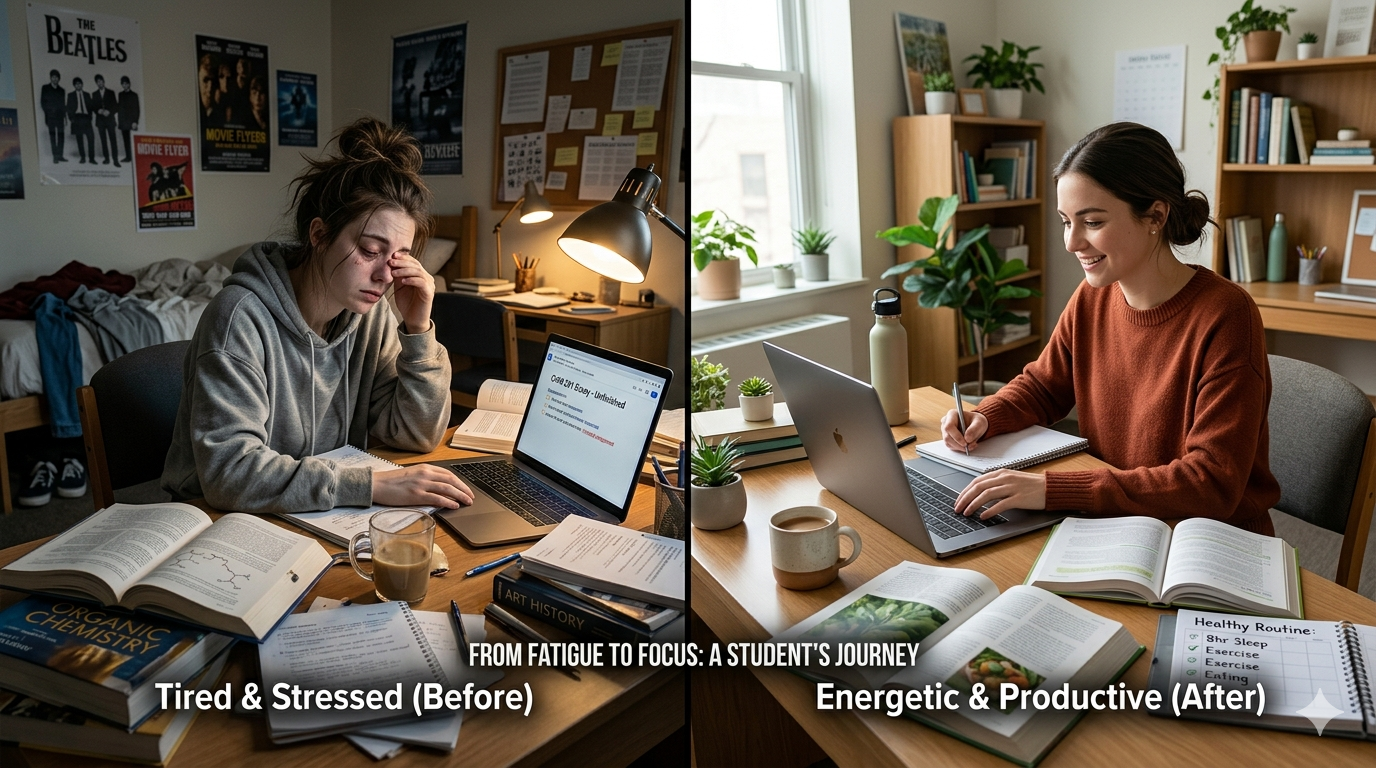
Many students believe that tiredness comes only from studying too much.
In reality, daily habits often play a bigger role.
Common causes include:
- Poor sleep quality
- Excessive screen time
- Stress and anxiety
- Lack of exercise
- Poor nutrition
- Mental overload
Identifying these causes is the first step toward feeling better.
1. Poor Sleep Quality
Sleeping for 8 hours does not guarantee quality sleep.
Students often:
- Use phones before bed
- Sleep at irregular times
- Wake up frequently during the night
These habits reduce sleep quality and leave the brain feeling less refreshed.
How to Fix It
- Sleep at the same time daily
- Avoid screens before bed
- Keep your room dark and quiet
- Limit caffeine late in the day
2. Too Much Screen Time
Students spend hours:
- Watching videos
- Using social media
- Gaming
- Studying on screens
Excessive screen exposure can increase mental fatigue and disrupt sleep.
Warning Signs
- Eye strain
- Headaches
- Difficulty concentrating
- Feeling mentally exhausted
Taking regular screen breaks can help reduce fatigue.
3. Stress and Academic Pressure
Many students carry constant pressure related to:
- Exams
- Assignments
- Future careers
- Family expectations
Stress forces the brain to stay alert for long periods.
This can create feelings of exhaustion even when physical activity is low.
How to Manage Stress
- Break large tasks into smaller steps
- Follow a study schedule
- Practice relaxation techniques
- Avoid comparing yourself with others
4. Lack of Physical Activity
Many students sit for long periods while studying.
This reduces:
- Blood circulation
- Energy levels
- Physical fitness
Exercise helps improve:
- Mood
- Focus
- Energy
- Sleep quality
Even a 20-minute walk can make a noticeable difference.
5. Poor Nutrition
Food directly affects energy levels.
Students often skip meals or rely on:
- Junk food
- Sugary drinks
- Excessive caffeine
These habits create temporary energy boosts followed by crashes.
Better Choices
- Fruits
- Vegetables
- Protein-rich foods
- Plenty of water
Healthy nutrition supports consistent energy throughout the day.
6. Mental Overload
Students constantly consume information through:
- Social media
- News
- Videos
- Study materials
The brain rarely gets time to rest.
This information overload contributes to fatigue and reduced concentration.
Taking breaks from constant information consumption can improve mental energy.
Signs That Fatigue Is Affecting Your Studies
You may be experiencing energy-related productivity problems if:
- You struggle to stay focused
- You feel sleepy during classes
- You forget information quickly
- You procrastinate frequently
- You feel exhausted after short study sessions
Recognizing these signs early is important.
How AI Tools Can Reduce Mental Fatigue
AI tools can help students save time on repetitive tasks.
Examples include:
- ChatGPT for explanations
- Notion AI for organizing notes
- Grammarly for writing support
These tools help reduce workload and allow students to focus on learning rather than repetitive tasks.
For writing assistance:
https://www.grammarly.com
For sleep and health information:
https://www.sleepfoundation.org
A Simple Energy Improvement Plan
Follow these habits daily:
- Sleep consistently
- Reduce screen time before bed
- Exercise regularly
- Drink enough water
- Eat balanced meals
- Take study breaks
- Manage stress proactively
Small improvements often create noticeable results within a few weeks.
https://studentaiincomehub.com/hardworking-students-still-get-low-marks/
https://studentaiincomehub.com/destroying-students-productivity/
https://studentaiincomehub.com/cant-focus-while-studying-anymore/
Final Thoughts
Many students feel tired all the time because of lifestyle habits rather than lack of sleep alone.
Factors such as poor sleep quality, stress, screen overload, inactivity, and unhealthy eating can quietly reduce energy levels.
The good news is that these problems are usually fixable.
By improving daily routines and reducing mental overload, students can increase energy, improve concentration, and perform better academically.
Feeling energetic is not just about sleeping longer.
It is about building healthier habits that support both the mind and body.
FAQ Section
Why do students feel tired all the time?
Students feel tired all the time because of poor sleep quality, stress, excessive screen time, unhealthy eating habits, and lack of exercise.
Can stress make students feel exhausted?
Yes. Chronic stress can cause mental fatigue and reduce energy levels significantly.
Does screen time affect energy?
Excessive screen time can disrupt sleep, increase eye strain, and contribute to mental exhaustion.
How can students improve energy naturally?
Students can improve energy through better sleep, regular exercise, balanced nutrition, hydration, and stress management.
Can AI tools reduce study-related fatigue?
Yes. AI tools can help automate repetitive tasks and improve organization, reducing mental workload.

Hi, I’m Balaji, founder of Student AI Income Hub. I write practical guides on AI tools, productivity, online income opportunities, and educational technology to help students study smarter, build digital skills, and make informed decisions about AI-powered learning.